7 Best Rivers for Beginner Rafters in the United States
Your first rapid should leave you laughing, not wondering whether you made a terrible vacation decision. The best rivers for beginner rafters combine manageable whitewater, beautiful scenery, experienced guides, and enough splash to make the photos worth showing off back home.
The key is choosing the right section of river, not just the right river. A river that offers a smooth family float in spring may have stronger currents after rain, and a famous rafting destination can have stretches built for first-timers as well as serious Class IV and V paddlers. Water level, guide service, minimum age requirements, and your group’s comfort level all matter.
What Makes a River Great for First-Time Rafters?
For most beginners, Class I and II water is the natural starting point. Class I is moving water with small waves and few obstacles. Class II introduces straightforward rapids, splashes, and basic paddle commands. A well-run Class III trip can also work for active first-timers, especially teens, couples, and friend groups who want a bigger rush and are comfortable listening closely to their guide.
The best first trips have recovery time between rapids. You get to catch your breath, look up at the canyon walls or forested banks, and learn how the boat responds before the next exciting section. That rhythm helps nervous paddlers settle in while keeping the adventure level high for everyone else.
A guided trip also changes the equation. Your guide reads the water, explains safety procedures, gives clear instructions, and helps each crew work as a team. You do not need rafting experience to enjoy the river, but you do need to show up ready to paddle, follow directions, and get a little wet.
7 Best Rivers for Beginner Rafters
These rivers are not ranked from easiest to hardest. Each can be an excellent first-time choice when you select an appropriate trip and go with a qualified outfitter.
1. Upper New River, West Virginia
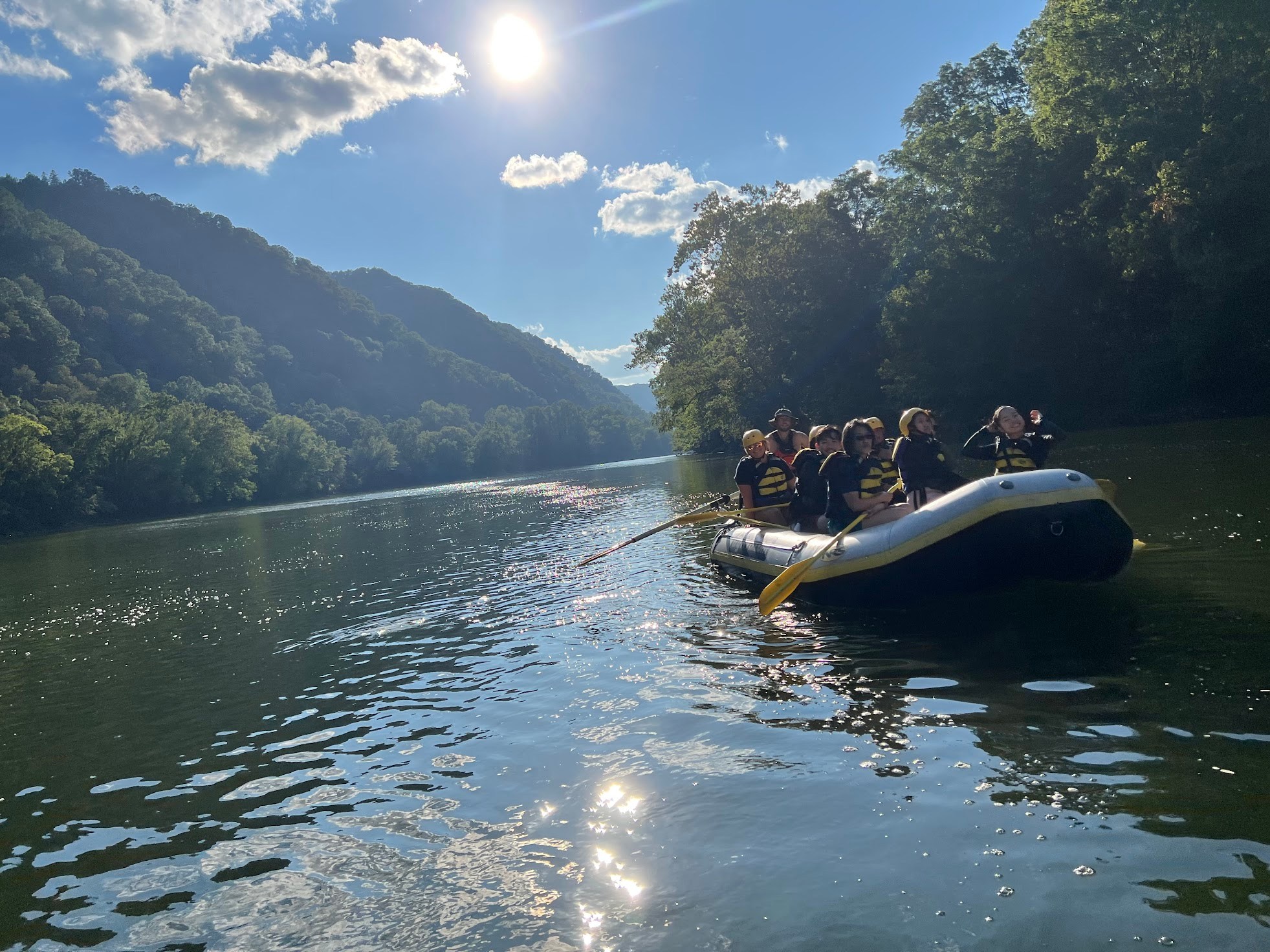
The Upper New River is a relaxed introduction to rafting in the New River Gorge region. Gentle currents, small riffles, swimming opportunities, and wide-open mountain scenery make it especially appealing for families with younger children, multi-generation groups, and anyone who wants more float time than white-knuckle action.
It is also a smart choice for groups with mixed confidence levels. First-timers can learn paddle basics in a low-pressure setting, while more adventurous guests still get a real day outside on one of America’s most storied rivers. Conditions and trip routes vary, so ask about the current water level and age requirements when booking.
2. Shenandoah River, Virginia and West Virginia
The Shenandoah River is known for calm stretches, scenic Blue Ridge views, and approachable Class I-II rapids. It is a strong option for families, youth groups, and first-time paddlers who want to pair easy whitewater with a laid-back day on the water.
The river’s gentle pace means it may feel more like a float trip than a full adrenaline outing, depending on the section and seasonal flow. That is a feature, not a flaw, for guests who are testing the waters before committing to bigger rapids. Bring sun protection, expect to spend time in the boat between riffles, and enjoy the chance to spot wildlife along the banks.
3. Nantahala River, North Carolina
The Nantahala is a classic first whitewater river, with cool mountain water and a reliable flow on many guided routes. Much of the trip offers friendly Class II rapids, then builds toward a memorable finish near Nantahala Falls.
That final rapid is why guides matter. It gives beginners a taste of excitement without making the entire day feel overwhelming, provided everyone listens up and paddles together. The water can be chilly even in warm weather, so a wetsuit or splash gear may make the experience much more comfortable.
4. South Fork American River, California
For a first rafting trip with more action, the South Fork of the American River is hard to ignore. Popular sections typically feature Class II-III rapids, sunny California canyon scenery, and plenty of opportunities for a crew to practice working together.
This is often a better fit for active beginners than for very young children or guests who are uneasy around bigger waves. You will likely paddle consistently, hear plenty of guide commands, and feel the satisfying payoff when the boat punches through a rapid as one team. Water levels can shape the difficulty significantly, especially early in the season.
5. Rogue River, Oregon
The Rogue River offers a scenic, uncrowded feel that makes a first rafting adventure feel like a real escape. Several stretches have moderate Class II-III whitewater, forested banks, and the kind of quiet moments that make you forget about your phone for a while.
It is especially appealing for travelers who want to make rafting part of a longer outdoor getaway. Some Rogue experiences are multi-day trips, which adds camp life and more time in the wilderness. That can be incredible for the right group, but it requires more planning than a half-day or single-day trip near a major vacation hub.
6. Colorado River, Colorado
The Colorado River near Glenwood Springs and through Glenwood Canyon can offer a terrific mix of mountain views and beginner-friendly whitewater. Depending on the route, first-timers may encounter Class II-III rapids with plenty of calmer water between them.
The trade-off is that spring runoff can make the river colder and more powerful. A section marketed as beginner-friendly in late summer may feel considerably more demanding earlier in the year. Be honest with your outfitter about the ages, swimming ability, and comfort level of everyone in your party so they can match you with the right trip.
7. Snake River, Wyoming
The Snake River near Jackson delivers big Western scenery with accessible whitewater sections that work well for adventurous newcomers. Many trips include Class II-III rapids, including lively waves that create a bigger splash factor than a gentle float.
This is a great pick for families with older kids, couples, and friends visiting Grand Teton country who want a high-energy afternoon without advanced technical rafting. It can feel brisk, both because of the mountain water and the quick-moving pace, so dress for conditions rather than the temperature on the parking lot.
How to Pick the Right Beginner Rafting Trip
Start with the people in your boat, not the biggest rapid on a brochure. A family with elementary-age children may have the best day on a scenic Class I-II float. A group of athletic adults may be happier on a guided Class III trip where they can paddle hard and celebrate every wave train.
Ask an outfitter four practical questions before reserving: What is the current water level? What are the minimum age and swimming requirements? How much active paddling is involved? What should we wear for the weather and water temperature? Clear answers are a good sign that the trip is organized around guest safety, not just sales.
Also consider the full day. Some trips take only a few hours, while others include transportation, changing time, a meal, or a full day on the river. Choose an itinerary your group can enjoy without rushing. The best rafting memories often include the ride back, when everyone is talking over the rapid they were sure would flip the boat.
Ready for More Than a Float?
A first trip does not have to be the easiest trip available. It simply needs to be the right challenge. In the New River Gorge, West Virginia Adventures can help guests move from a beginner-friendly float to a more energetic New River experience as their confidence grows. The advanced Lower Gauley River, on the other hand, is a goal for another day, not a starting line.
Pick a river that fits your crew, trust your guide, and bring a willingness to paddle when it counts. Your next story may start with a nervous laugh at the put-in and end with everyone asking when they can do it again.