
What to Wear Whitewater Rafting in West Virginia
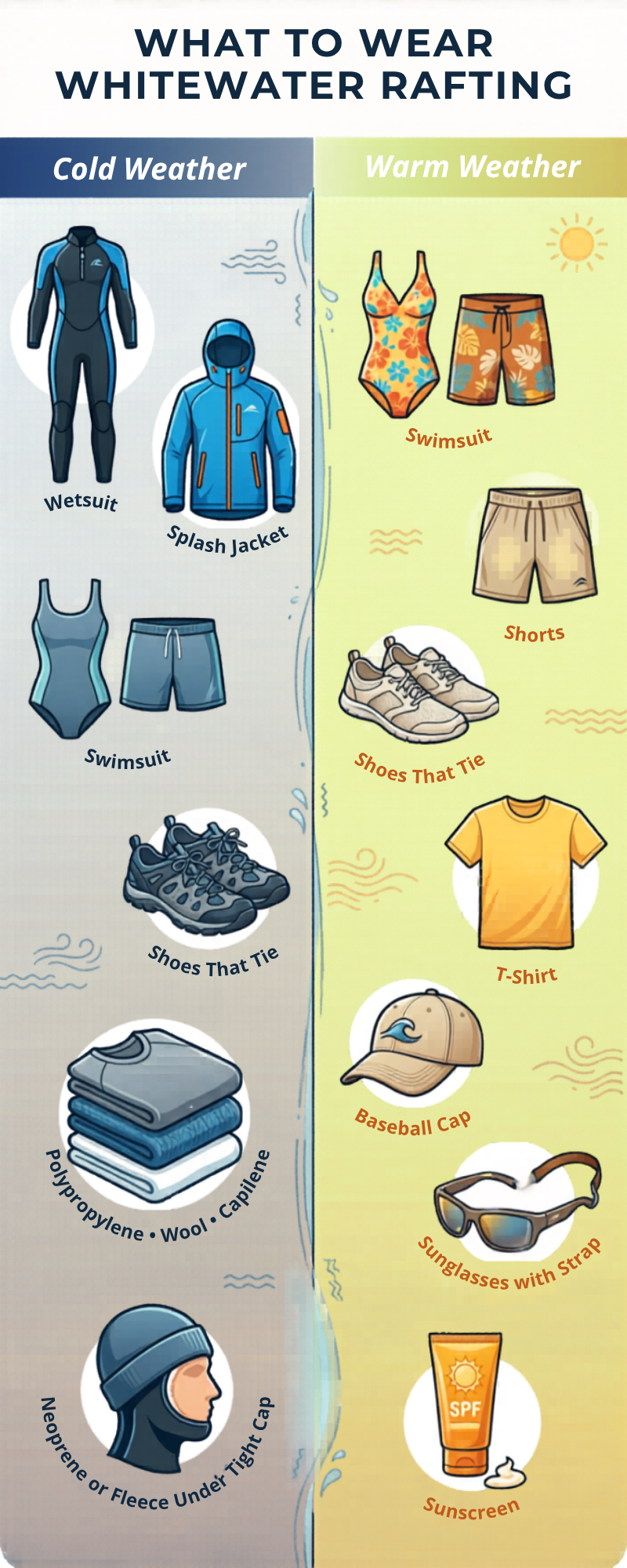
A sunny morning in the New River Gorge can feel like perfect T-shirt weather. Then the first wave breaks over the raft, the water temperature gets your attention, and a loose sandal disappears somewhere downstream. Knowing what to wear whitewater rafting means you can focus on the splash, the scenery, and the moment your whole crew paddles through a rapid together.
The goal is simple: dress for getting completely wet, staying comfortable afterward, and moving easily in the raft. Your guide will handle the river knowledge, safety talk, and commands. A little smart planning on your end helps make the day feel exciting for the right reasons.
What to Wear Whitewater Rafting: The Core Outfit
Start with quick-drying clothes that you can comfortably swim, sit, and paddle in. A swimsuit, athletic shorts, board shorts, synthetic T-shirt, or moisture-wicking tank top all work well in warm weather. Many guests wear a swimsuit under lightweight shorts and a sun shirt, which makes the transition from river to changing area easy.
Avoid cotton if you can. A cotton T-shirt may feel fine before launch, but it holds water, gets heavy, and can leave you chilly after a few splashes. Synthetic athletic fabrics, nylon, polyester, and merino wool dry faster and keep their shape better when wet.
Your outfit does not need to be fancy. It needs to stay put. Choose shorts with a secure waistband, swimwear that will not shift when you hit a wave, and tops that do not restrict your shoulders while paddling. This is not the day for a flowing cover-up, a favorite pair of jeans, or anything you would be upset to see muddy.
Footwear matters more than most first-timers expect
Wear shoes that attach securely to your feet. Old sneakers, water shoes, river sandals with heel straps, and sturdy aquatic shoes are all solid choices. You may step on uneven ground around the launch or takeout, and secure footwear also helps you stay comfortable in the raft.
Flip-flops, slide sandals, loose Crocs, and bare feet are poor choices for a rafting trip. They can come off quickly in moving water, offer little protection, and are often not permitted on more active whitewater trips. If you are deciding between a worn pair of sneakers and flip-flops, bring the sneakers.
Dress for the Weather, Not Just the Forecast
West Virginia weather can change quickly, especially around the gorge. Air temperature is only part of the equation. River water, cloud cover, wind, and how often your boat catches a wave all affect how warm you feel.
On a hot summer day, a swimsuit or quick-dry shirt and shorts may be all you need. Add sunscreen and consider a lightweight long-sleeve sun shirt if you burn easily. Long sleeves can actually feel cooler than repeated sunscreen applications when they are made from breathable performance fabric.
For a mild day, wear a synthetic shirt with a lightweight fleece or insulating layer nearby for before and after the trip. Avoid bulky sweatshirts in the raft. Once soaked, they become heavy and cold. A thin synthetic pullover is a better option when you need extra warmth without losing mobility.
Cold-weather rafting calls for more deliberate layers. Depending on conditions and the trip, an outfitter may recommend wetsuits, splash gear, or other specialized equipment. Ask before your trip what is provided, what is available to rent, and what you should bring yourself. A wetsuit works by trapping a thin layer of water that warms against your body, so it is meant to fit close rather than hang loose.
If conditions are chilly, choose synthetic or wool base layers under any provided river gear. Skip cotton socks and cotton leggings. Wet cotton is famously uncomfortable, and a cold raft ride is not the story anyone wants from a big weekend away.
What Your Outfitter Usually Provides
Guided rafting trips are designed so guests do not need to arrive with a garage full of river equipment. At West Virginia Adventures, guides fit guests with required safety gear and explain how to use it before the trip gets underway.
A properly fitted personal flotation device, commonly called a life jacket or PFD, is essential. It should feel snug enough that it will not ride up over your shoulders, but it should still allow you to breathe and paddle freely. On trips where helmets are required, your guide will make sure yours is fitted correctly as well.
Listen closely during the gear fitting and safety briefing. Your guide can adjust a strap, answer questions about layers, and explain where to sit in the raft based on your group and the river conditions. That personal guidance is especially helpful for kids, first-time rafters, and mixed-experience groups.
Protect Yourself From Sun, Water, and Lost Gear
The sun can be surprisingly strong on the water, even when the gorge feels cool. Apply water-resistant sunscreen before you arrive and reapply when appropriate. Cover your face, ears, neck, shoulders, tops of feet, and the backs of your legs. A brimmed hat can be useful before and after rafting, but ask your guide whether it is practical or allowed during the trip.
Sunglasses are great for the bus ride, check-in, and downtime, but wear them on the river only if they have a secure retaining strap. The same goes for prescription glasses. A floating strap is even better, though nothing makes eyewear impossible to lose in moving water.
Leave jewelry and valuables behind whenever possible. Rings, watches, dangling earrings, and sentimental necklaces can snag, get damaged, or disappear. If you need medication, tell your trip leader or guide before launch so it can be stored appropriately. Bring a waterproof case only if your outfitter permits it and you are prepared for the risk. Rapids have a way of testing even the most confident phone case.
What Kids and Groups Should Wear
For family trips, dress children in the same quick-dry basics as adults: a swimsuit or athletic clothes, secure shoes, and layers suited to the forecast. Check that their shoes still fit and that drawstrings, loose accessories, and oversized clothing are not creating a hassle. Kids tend to spend more time splashing, sitting in pooled water, and celebrating every wave, so dry clothing for afterward is especially welcome.
For scout groups, school trips, team outings, and reunions, encourage everyone to pack with the same simple checklist. Consistency makes check-in smoother and prevents one person from arriving in jeans and flip-flops while everyone else is ready to paddle. Group organizers should also remind guests that rafting clothes are river clothes. They will get wet, and sometimes a little muddy.
Pack a Dry Change for After the River
The best thing you can wear after whitewater rafting is a dry shirt, dry underwear, and dry shoes. Keep them in a bag that stays with your vehicle or follows your outfitter’s instructions for storage. A towel, warm layer, and plastic bag for wet clothes are small additions that make the ride home, cabin check-in, or post-trip meal much more comfortable.
If you wear contacts, bring a backup pair of glasses for afterward. If you have long hair, bring a hair tie. If you are prone to getting cold, pack a warm jacket for the end of the day even if the morning begins sunny. Those details are not glamorous, but they are the difference between wrapping up the day feeling refreshed and shivering in a damp seat.
A Final Word Before You Paddle
Wear quick-dry layers, shoes that stay on, and gear you are happy to get wet. Then let the river do what it does best: turn an ordinary day into a story your group will keep telling. When you are dressed comfortably and listening to your guide, there is nothing left to do but paddle hard, laugh loud, and enjoy the ride.